

I got an email yesterday from an editor I know, asking me to review a paper. It looked like an interesting study, in my area of expertise, from a journal I like. I probably should have said yes. Instead I did what I almost always do now: I stared at it for a few seconds, felt the weight of everything else I’m behind on at work, and moved on to the next email. I’ll get to it later.
This isn’t a confession of professional laziness. I mean, it kinda is, though I did eventually agree to review it. But it’s also a window into a system in the midst of collapse.
Editors at major journals report that it’s getting harder to find researchers to review submissions. And just ten percent of reviewers handle half of all peer reviews. This means that the timeline from submission to publication is getting longer and longer.
Peer review is foundational for the credibility of scientific knowledge. It’s also very tedious. The community of experts in a field examine an article and judge whether or not it holds up. Without this, there’s no check on any given claim and the field can become unmoored from reality.
As I argued in my last piece, every institution is an alignment project—a system encodes values through practice. Peer review is how science aligns itself with truth-seeking. Not by applying rules from above, but through the mundane accumulated habits of thousands of researchers deciding, paper by paper, what counts as good work.
But that system runs on a finite resource: the careful attention of qualified people. And that resource is under immense strain.
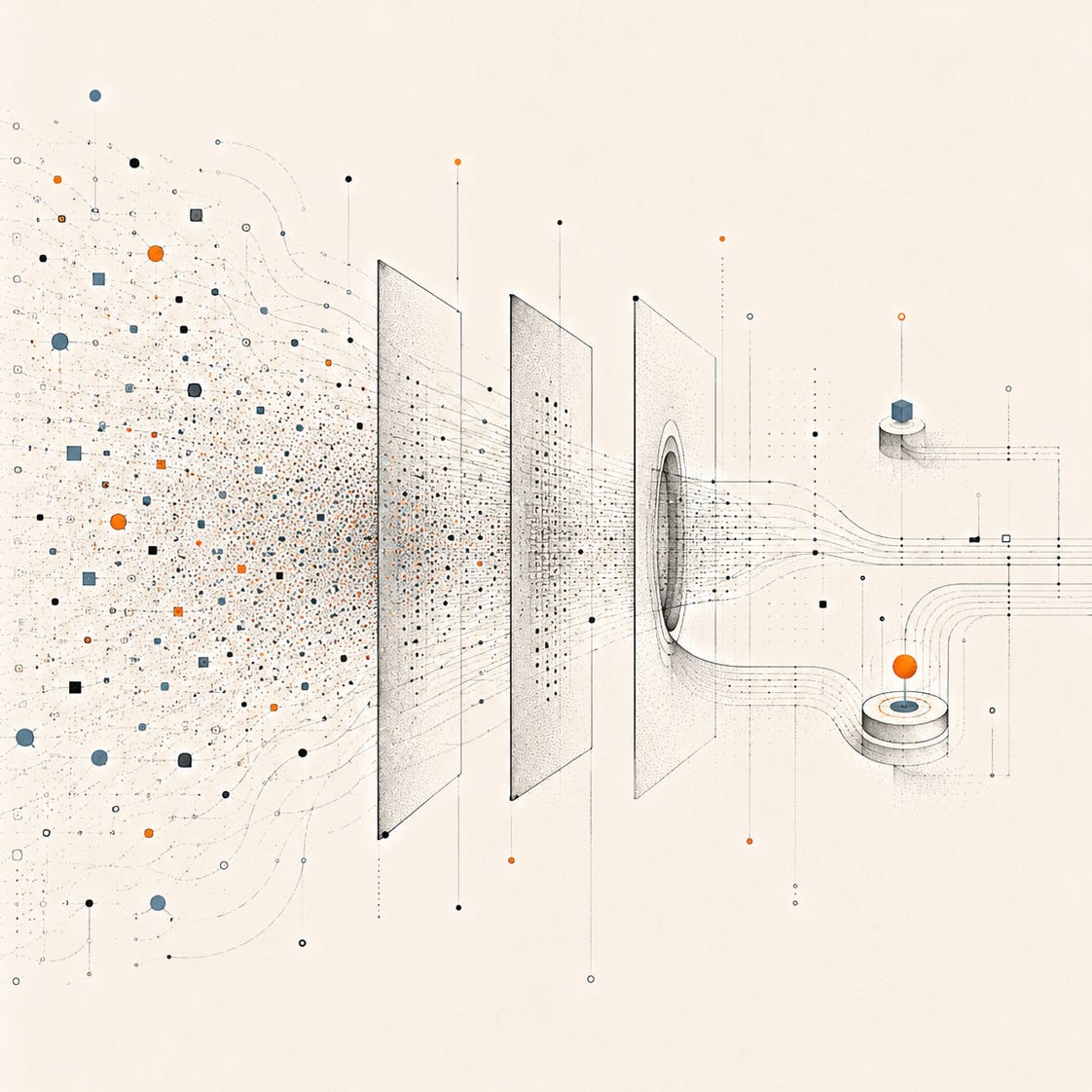
It’s easy to peg the crisis in scientific publishing with the arrival of ChatGPT. Almost immediately, researchers started using it to draft papers, and journals were quickly flooded with more submissions than they could handle. There’s good reason to tell the story this way. An analysis of over a million papers and preprints in late 2024 showed likely AI involvement in over twenty percent of computer science abstracts, up from around two percent just two years earlier. And this isn’t isolated to computer science; submissions have surged across fields. Machines make it way easier to write up your research so more gets written.
But the flood of submissions didn’t start with AI. It started with graduate students.
Modern research universities run on graduate student labor. Grants fund principal investigators, but often the actual work of science—the literature reviews, running the experiments, the data analysis, not to mention the teaching—falls to grad students and postdocs. This isn’t a fluke and it isn’t necessarily a bad thing; as a grad student I wanted exactly this kind of hands-on experience.
But universities depend on that research funding, which means they depend on a steady supply of cheap labor. And the funding system is built to keep that supply growing: a PI’s record of training grad students strengthens the case for their next grant, which pays for the next cohort of students, who help win the grant after that. Each cycle produces more people long before it produces enough permanent positions for them.
Every one of those students arrives needing to publish. Publishing is the currency of academia—the one thing that reliably converts into a career—and the pressure starts before anyone is even admitted. Applicants pad their CVs with publications just to compete for a spot. They have to because the spots are scarce: across all fields and universities, only about one in five doctoral applicants gets an offer of admission, and in the most prestigious corners the odds are even worse, with some programs fielding hundreds of applicants for a single opening. You need a publication record just to get started.
And it never lets up. The next rung, a faculty job, is just as hard to reach: fewer than a quarter of science PhDs move into a tenure-track position and the odds in the humanities hover around 20%. Most people in the pipeline are on their way out. If you don’t land a faculty job, you join me and some of my best friends, cycling through postdocs and adjunct positions before eventually making our way out of academia (don’t worry, it’s okay out here).
The cause of the flood is that everyone is publishing the whole way through. Those of us who wash out weren’t publishing any less than the people who stay. We can’t afford to, not while we’re still competing. So the system holds a large and growing population, most of them temporary, and every one of them writing as fast as they can.
The result is predictable. Worldwide scientific output passed 3.3 million papers in 2022, up from 2 million in 2010, and it has been climbing for decades at roughly four to five percent a year. But the pool of people qualified and willing to do the unpaid, unrewarded work of reviewing those papers has not kept pace. It can’t. Nobody gets tenure for being a great reviewer. Nobody wins a grant because they gave thoughtful feedback on someone else’s manuscript. If anything, that might work against you since that time you spent reviewing is time you could’ve been writing your own article.
The incentive structure rewards production and ignores correction. In other words, the system is misaligned, and it has been for a long time.
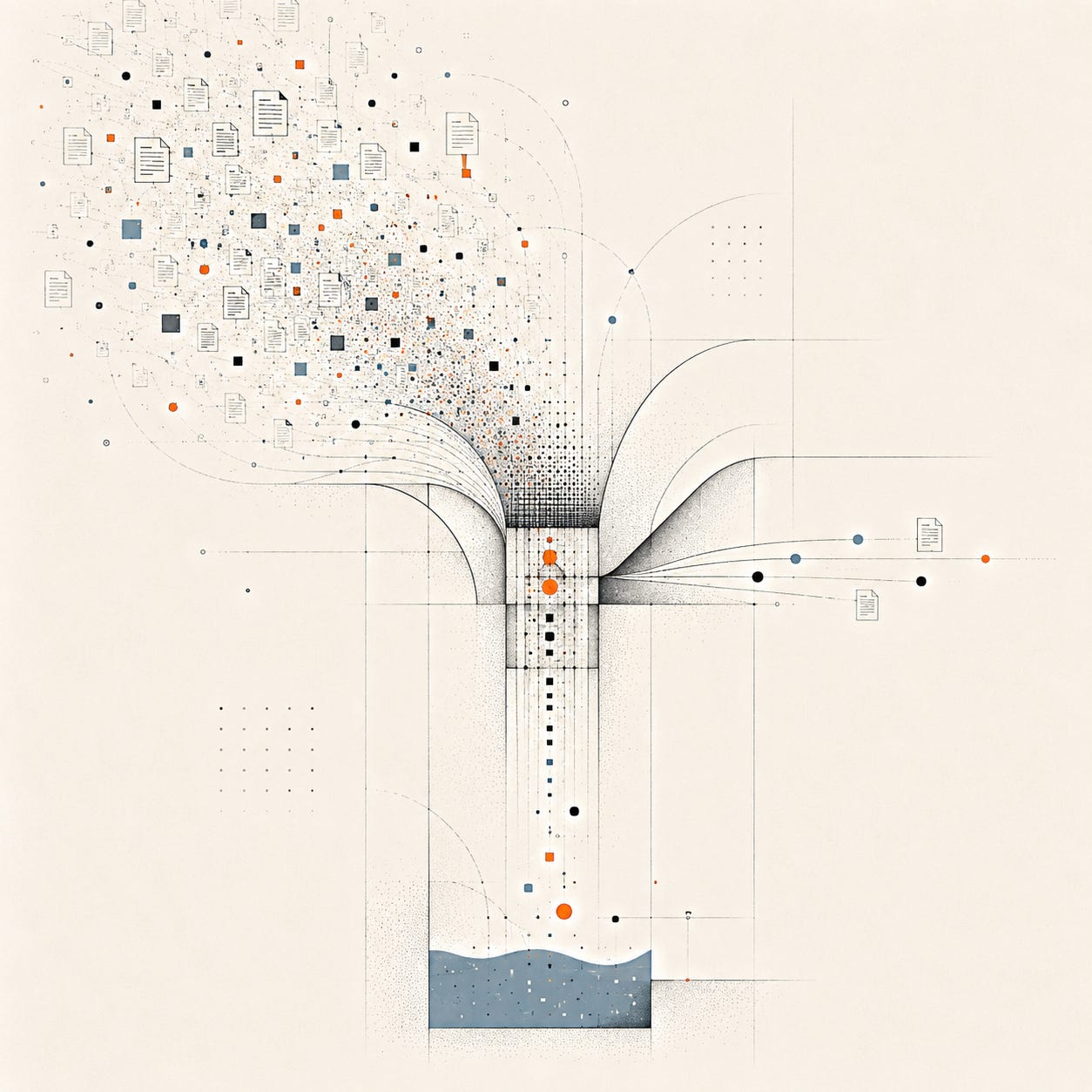
If the flood were merely a logistics problem—too many papers, not enough reviewers—it’d be serious but solvable. Hire more editors, build better triage systems, maybe pay reviewers.1 But the flood doesn’t just overwhelm the pipeline. It also changes the kind of knowledge flowing out of that pipeline.
In 2023, a team of researchers analyzed 45 million papers and 3.9 million patents spanning six decades. The question they were trying to answer is whether or not science is progressing. That’s a tricky thing to measure, so they used a metric called the Citation Disruption (CD) index. This index measures whether a paper disrupts the network of citations around it—i.e., does subsequent work cite it instead of its predecessors, or merely alongside them? In other words, a disruptive paper rewires how people think about a problem and who they cite, while a consolidating paper extends what’s already known.
You can critique this index, and it remains a live debate,2 but it quantified something that people have qualitatively suspected: across every field they examined, the share of disruptive work has been declining for decades. The absolute number of disruptive papers has stayed roughly flat, but the growth in total output means that consolidating, incremental work now dominates the landscape. The decline isn’t explained by changes in citation practices or field-specific quirks. It’s structural.
The thing driving it, they argue, is that researchers are drawing on a smaller slice of the existing work out there. This starts back in the mid-twentieth century, decades before the submission surge I’ve been describing. So the flood itself didn’t cause this narrowing of sources. But what the flood does do is accelerate it, turning a slow drift into a current too strong to swim against.
When there are more articles published than anyone could possibly read, you stick with what you already know. You cite the papers your advisor cited. You work with the theories your reviewers will recognize. You write the kind of paper that’s most likely to survive review. This means the kind of paper that doesn’t challenge too much, doesn’t require the reviewer to learn something new, doesn’t ask them to rethink a framework they’ve built a career on.
Faced with the torrent of research, academia mounts a defense: conservatism. The problem is that it’s autoimmune. The response attacks the very thing the system exists to produce: discovery itself. More papers, less discovery. Not because any of us are less talented, but because the system’s coping mechanism for overload is to narrow the aperture of what counts as acceptable work.
This is what I mean when I talk about misaligned incentive structures. Nobody decided that science should become less disruptive. Nobody wrote a memo saying “produce more incremental work.” The narrowing emerged from the accumulated logic of a system that rewards production, punishes risk, and has no mechanism for filtering at scale. The values the system enacts—safety, incrementalism, self-citation—have drifted from the values it claims to serve: discovery, originality, the self-correcting pursuit of truth.
Now add AI to the mix.
Whatever else LLMs have done, they’ve certainly made writing faster. The literature review that used to take weeks now takes an afternoon. You can get the first draft of a methods section in seconds. Remember all those people I mentioned above who need to publish to find a place in academia? You can imagine the practical allure of these tools. And as you’d expect the water is rising.
You can see AI’s footprint in the obvious places. By one account, AI-related work in the natural sciences reached roughly 80,000 publications in 2025, and AI now appears in somewhere between six and nine percent of all scientific publishing, up from under one percent in 2010. But these are papers about AI, and that’s just a small part of this.
If you’re at all worried about the capacity of institutions to check the flood of research, and I am, then the more important numbers are those that are harder to pin down: how many papers are using AI but not disclosing it?
Earlier I noted that a fifth of computer science abstracts and an eighth of biomedical ones that carry the fingerprints of a language model. A separate study recently combed through 2.5 million biomedical papers looking for citations to work that doesn’t exist. The rate is climbing steeply: about 1 paper in 2,800 in 2023, 1 in 458 in 2025, and 1 in 277 in the first weeks of 2026. These aren’t papers about artificial intelligence. They’re ordinary research papers in ordinary journals. If the 80,000 papers about AI are the tip of the iceberg, this is a hint at the size of the rest of it.
The tools create a vicious cycle. Researchers are under immense pressure to publish. They now have tools that make publishing faster. Using them may be risky, but not using them carries a different risk: falling behind colleagues who have doubled their output. So the baseline shifts and what began as assistance becomes expectation. The pressure ratchets up, while the system meant to check the output continues to run at the same human speed.
In October 2025, arXiv—the preprint server that much of physics, mathematics, and computer science runs on—stopped accepting review articles and position papers in its computer science section unless they’d already passed peer review elsewhere. Their explanation?
“In the past few years, arXiv has been flooded with papers. Generative AI / large language models have added to this flood by making papers – especially papers not introducing new research results – fast and easy to write. While categories across arXiv have all seen a major increase in submissions, it’s particularly pronounced in arXiv’s CS category.”
More recently, they added a one-year ban on anyone caught submitting unchecked AI output as their own. The section chair’s reasoning summarizes the whole problem neatly: if authors don’t check the AI output “this means we can’t trust anything in the paper.”
arXiv’s policy is one way to cope, but it doesn’t stem the tide. If anything it just highlights that the traditional filters, peer-review, are still the only ones we’ve got. But none of us have more time to review papers, and the pool of people willing to do the unpaid work of correction hasn’t grown.
So how is the system going to adapt?
What I’ve been describing so far is the formal machinery of science: journals, peer review, citation metrics. These are the explicit filters that verify scientific knowledge, but they aren’t the only structures that determine the shape of that knowledge.
There’s also the intuitions of experienced researchers about which questions are worth pursuing. The word-of-mouth networks through which scientists learn whose work their friends trust. The relationships between mentors and students that transmit knowledge and connections to gatekeepers. These informal heuristics and social structures are the foundational filtering mechanisms of science.
What are people going to do as AI-accelerated output places the formal machinery of science under more and more stress? My bet is that we’ll cope the way people tend to cope when formal systems fail: we’ll fall back on these social and personal heuristics. Affiliative networks, reputation, status, prestige. These are the oldest technologies we’ve got for deciding what to believe.
These sorts of heuristics may start as reliable signals—if a friend I trust tells me they trust someone else, then I’ll typically trust that stranger as well. But, that only extends so far. And beyond that point the signal degrades, so we lean on others: where did they train? where have they published? The heuristics become detached from what they originally tracked—trust and quality—but they’re still tempting to follow because they’re so much easier than doing the hard work of reading and assessing someone’s work on its own merits.
Pedigree is a signal like this. A 2022 study found that just 20 percent of universities produce 80 percent of tenure track faculty and that nearly one in eight come from just five schools. This isn’t a new insight, we’ve known this for decades (just check out the references in that 2022 study). Some of this may reflect real differences in training and quality. But that is exactly what makes the heuristic so dangerous: it mixes genuine information with accumulated advantage, until the two become hard to separate.
That’s dangerous because status in this sort of a system flows almost entirely downhill. Depending on the field, only 5 to 23 percent of faculty ever work somewhere more prestigious than where they earned their PhD. This means the pedigree of where someone starts gets locked in early and rarely upgraded.
The consequence is a self-reinforcing loop. Researchers at these fancy universities have more resources, write more papers, have their papers cited more often, and win more awards, which let them write more papers. The divide grows and the heuristic we use to separate the wheat from the chaff seemingly justifies itself. Seemingly.
The influence of prestige and status also play out in journals themselves. If this heuristic tracked quality, then the marquee venues, Nature, Science, PNAS, would be the most reliable sources of knowledge. But retractions correlate with prestige rather than against it: papers in Nature, PNAS, and Science were retracted at nearly ten times the background rate across one decade (though this is still ~1%).
The likely explanation is that those journals attract riskier, higher-stakes work, and they get scrutinized harder, so more of their errors surface. But this probably isn’t just about errors—other work in this area suggests that the majority, 67%, of retractions were due to misconduct. Whatever the cause of retraction, researchers across these studies find that the rate is growing.
My point is not that science is broken. It’s that these informal heuristics and parochial social networks are poorly calibrated to the supposed values of science.
Right now these informal filters already constrict and distort the way we produce knowledge, but the formal structures provide some measure of balance against them. I, a wee bit of chaff, can still dream of publishing in Nature. But as AI erodes those time-consuming formal structures, what will we have left except to fall back on our easier rules-of-thumb?
There’s something both reassuring and unsettling about this. Reassuring because it suggests that the social instincts underlying trust in knowledge are durable. We know how to form networks of trust; we’ve been doing it for millennia. Unsettling, because the whole point of scientific institutions was to extend trust beyond personal networks—to make it possible for a finding from a lab in São Paulo to influence research in Stockholm, to be trusted by people who’ve never visited and will never meet its authors. That extension of trust is one of the great achievements of the modern academy. And the flood is drowning it.
I don’t think this is a problem anyone is going to solve. The structure and incentives of the system have been pushing toward more production for a long time. And AI accelerates that push dramatically.
The formal infrastructure of correction can’t scale to match this acceleration because it depends on things that are inherently slow: attention, judgment, relationships, the accumulated intuition that comes from years of deep engagement with a field.
We have built a knowledge-production system that is generating more plausible claims than it can evaluate. And the adaptation to this overwhelming bounty is the same thing we do whenever we’re stressed out and flooded with information: we reach for what we already know. We narrow our reading, just as a way to cope. We fall back on signals that are easy to parse, even if we know they’re not inherently connected to the thing we really want to see: discovery.
The flood of research can look like productivity. More papers means more information, and somewhere in all that information are real breakthroughs: strange findings, new methods, ideas that could become the seeds of entire fields. But a breakthrough only matters if it can be found, checked, trusted, and carried forward. That is what the formal machinery is struggling to do, and what our informal heuristics weren’t built to do.
So as the waters continue to rise, the question isn’t just how our filters will adapt to survive. It’s whose work will still be visible when they do.
It’s worth remembering that researchers, editors, and reviewers are all doing this for free. Meanwhile academic publishers (looking at you Elsevier, Springer Nature, Wiley, Taylor & Francis, and SAGE) earn about $11 billion annually. That’s an interesting business model right?
The most damning critique probably comes from Petersen, Arroyave, and Pammolli, who argue the measured decline is largely an artifact of “citation inflation.” Reference lists have lengthened over time, which mechanically depresses the index. When they re-ran the analyses adjusting for inflation, disruptiveness actually rose from 2005 to 2015. Park, Leahey, and Funk, the team who built the CD-index, maintain the decline is robust, noting it has been replicated across over 100 studies using multiple metrics, including non-citation-based ones that would be immune to inflation. Like I said, a live debate.